
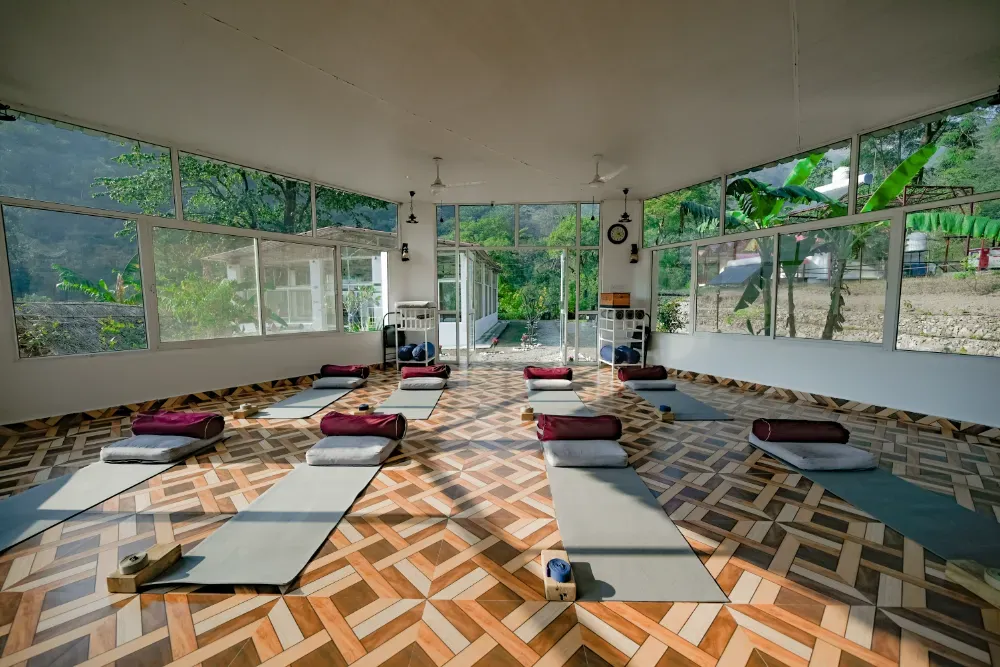
Career advice about yoga tends to swing between two extremes: either it is a spiritual calling that should never be discussed in commercial terms, or it is a lifestyle business you can scale from a laptop. Neither is much use to a twenty-four year old deciding whether to spend a month and their savings on a teaching qualification. Here is a more grounded account. What the certificate actually is A foundation-level teaching certificate from a registered school is a credential recognised internationally. It allows you to register as a teacher, apply to studios, and lead classes with insurance. It is a genuine professional entry point, comparable to a level-one coaching qualification in sport. What it is not is a job offer. A certificate is a beginning, not a finish line. The confidence to teach comes from the hours you log with real students, which is exactly why serious courses spend so much time on practical teaching rather than theory alone. The realistic career paths Graduates generally end up in one or more of five places: 1. 2. 3. 4. Studio employment. Teaching scheduled classes at an established studio. Reliable, usually part-time at first, and the fastest way to accumulate teaching hours. Independent classes. Renting a hall, community centre or park space and building your own group. Lower ceiling early, much higher ceiling later. Retreats and workshops. Higher value per event, but it depends entirely on reputation, which takes a few years to build. Online teaching. Teaching across time zones. Crowded, but genuinely viable for teachers with a specific niche and consistent output. Adhiroha Yoga School Institutional work. Schools, gyms, corporate wellness programmes, physiotherapy-adjacent settings. Often the steadiest income and the least discussed. What actually differentiates teachers Not flexibility. Employers and students respond to three things: whether you can keep a room safe, whether you can explain something clearly, and whether you turn up reliably. All three are trainable. This is why the quality of your training matters more than its length — a course where a teacher watches your hands and tells you afterwards exactly what they did is worth more than one where you were a face in a hall of forty. The financial picture, plainly A month-long residential course in India, including accommodation and meals, typically costs well under what a comparable non-residential course costs in Europe or North America — which is one reason students travel for it. Treat it the way you would any professional training: as a cost with a payback period, not as a holiday expense. Most people who make teaching their primary income take two to three years to get there, teaching alongside other work in the meantime. Choosing where to train If you intend to teach professionally, choose your school on evidence rather than photographs. Verify the registration in the official directory. Ask how many students are in a batch. Ask who teaches anatomy and what their qualification is. Ask what happens after graduation — the better schools stay in contact with alumni and answer questions long after the certificate is issued. Many graduates of a residential yoga teacher training in rishikesh return two or three years later for advanced certification, and continuity with your first teachers is worth more than it sounds. The honest caveat Yoga teaching is not lucrative early and it is not passive. It is physical, social work that requires you to be present for other people several times a day. The people who last are usually the ones who would practise anyway, and who found that teaching made their own practice better. If that describes you, it is a real profession worth training for properly.
previous post